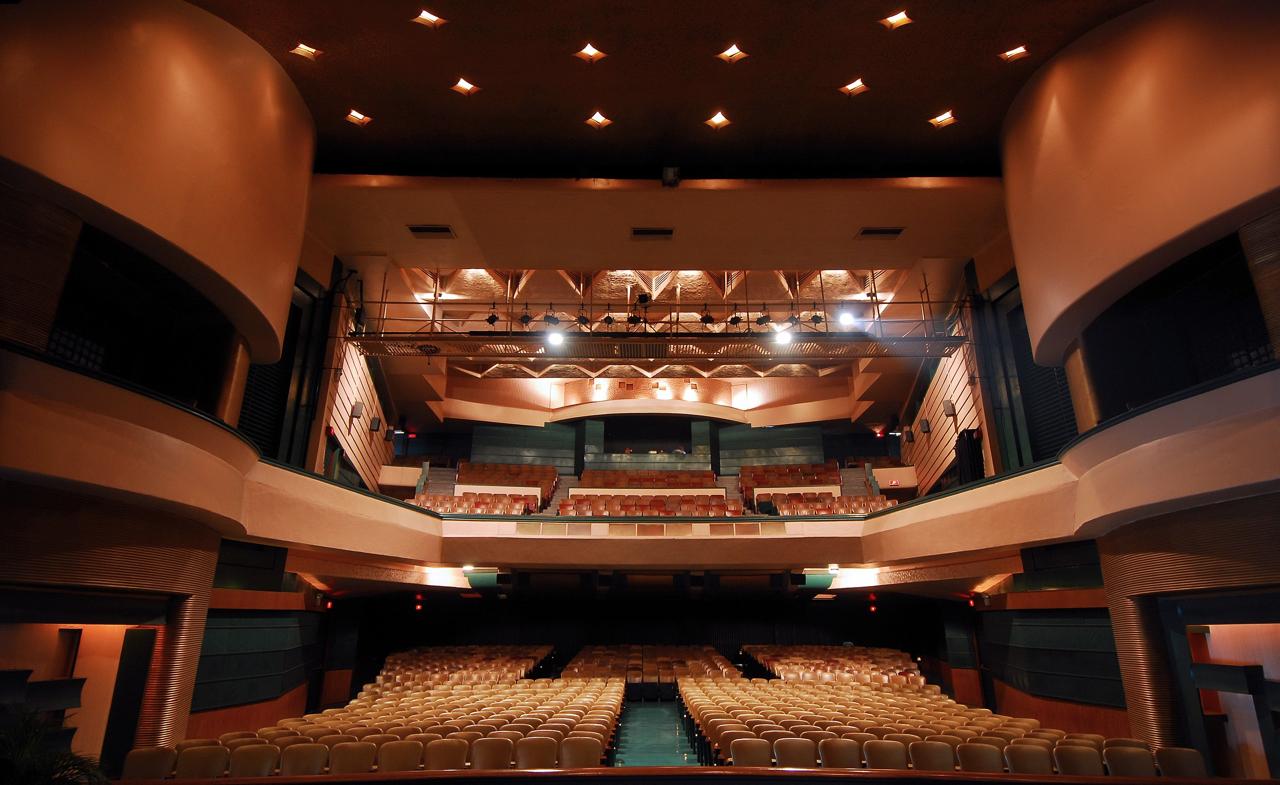
Before the Cultural Center of the Philippines, there was the FEU Auditorium on “Calle Morayta.”Culture and artistry flourished, built on the idea of accommodating and cultivating talent in the performing arts.
Plays, concerts, musicals, and other theatrical works premiered on its grand stage, including Johann Strauss’ Die Fledermaus, Giuseppe Verdi’s four-act tragic opera Aida, National Artist for Music Felipe de Leon’s Noli Me Tangere and National Artist for Literature Nick Joaquin’s masterwork, A Portrait of the Artist as Filipino.
“On performance nights, [Calle] Morayta was transformed into a dazzling Mayfair as the beautiful people stepped out of limousines with their diamonds and designers, perfuming the Morayta ambiance with their French aromas,” the writer Joaquin once said.
The FEU Auditorium began as a promise made by Dr. Nicanor Reyes Sr. to theater luminary Sarah Kabigting Joaquin, sister-in-law of the writer Joaquin and founder of the Far Eastern University (FEU) Theater Guild, after seeing her production of the James Reach and Tom Taggart play, Call Me Mike.
Post-war 1949, the FEU Auditorium was built, becoming the Calle Morayta the writer Joaquin eventually waxed poetic and reminisced about.
Like FEU’s campus that includes a six-building Art Deco complex, the FEU Auditorium was designed by National Artist for Architecture Pablo Antonio Sr.
Its sleek geometric patterns adorned with curved lines, inspired by shapes, symmetry, and subtlety, blended form and function and sparked a cultural renaissance that immersed students and audiences in world-class performances.
The FEU Auditorium became a temple to culture and the arts in post-war Manila, at a time before there even was any form of a cultural center in the Philippines.
More importantly, it became an avenue to hone and nurture the talents of FEU’s cultural groups under the FEU Center for the Arts (FCA), including its Bamboo Band, Chorale, Dance Company, Drum and Bugle Corps, Drummers, Guides, and the aforementioned Theater Guild.The University’s Bamboo Band, in particular, will evoke the themes of freedom of expression and Filipino culture and identity through its upcoming concert, MALAYA: Songs of Freedom, at the FEU Auditorium tomorrow, September 26. Guest artists include the FEU Chorale and Heleina Li from the FEU Theater Guild.
While the National Artist Joaquin only referred to the Auditorium when he spoke about Calle Morayta, the spirit of this ideal lives on and extends beyond its Art Deco walls.
Inside FEU’s Engineering Building lies the FCA Studio, a black box–style venue where smaller, more intimate performances take place, such as Boxstage Manila’s gripping tale of friendship and heartbreak, Tagay Para sa Ex, and the FEU Theater Guild’s upcoming reimagining of Guy de Maupassant’s Mother Sauvage, Moryon—both written and directed by the FEU Theater Guild’s Artistic Director, Edward “Dudz” Teraña.
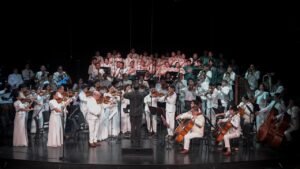
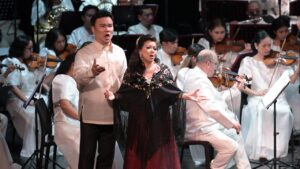
Meanwhile, 70 years after the legendary soprano Conching Rosal awed the audiences in her performance as the free-spirited Carmen in a Tagalog-translated version of the eponymous opera by Georges Bizet, the Manila Symphony Orchestra (MSO) returned to the FEU Auditorium on September 1 for its centennial celebration concert, Opera at Kundiman: The Legacy of the Maestra Conching Rosal.
Scattered raindrops over Manila accompanied the roaring applause of the audience as the MSO reprised the iconic repertoire of Rosal—from excerpts of the Tagalized Carmen that put Rosal on the map to the sorrowful and heartfelt kundiman vocal works written by Francisco Santiago, Nicanor Abelardo, and Constancio de Guzman, among others.
It harkened back not just to post-war, vanity-fair Manila but also to Dr. Reyes’s dream and commitment to enrich students not only with academics and athletics but also with artistry—for the shows still go on in Calle Morayta.